
They were checking a wind farm off Norfolk’s coast when they accidentally uncovered three centuries-old lead ingots from a forgotten merchant shipwreck
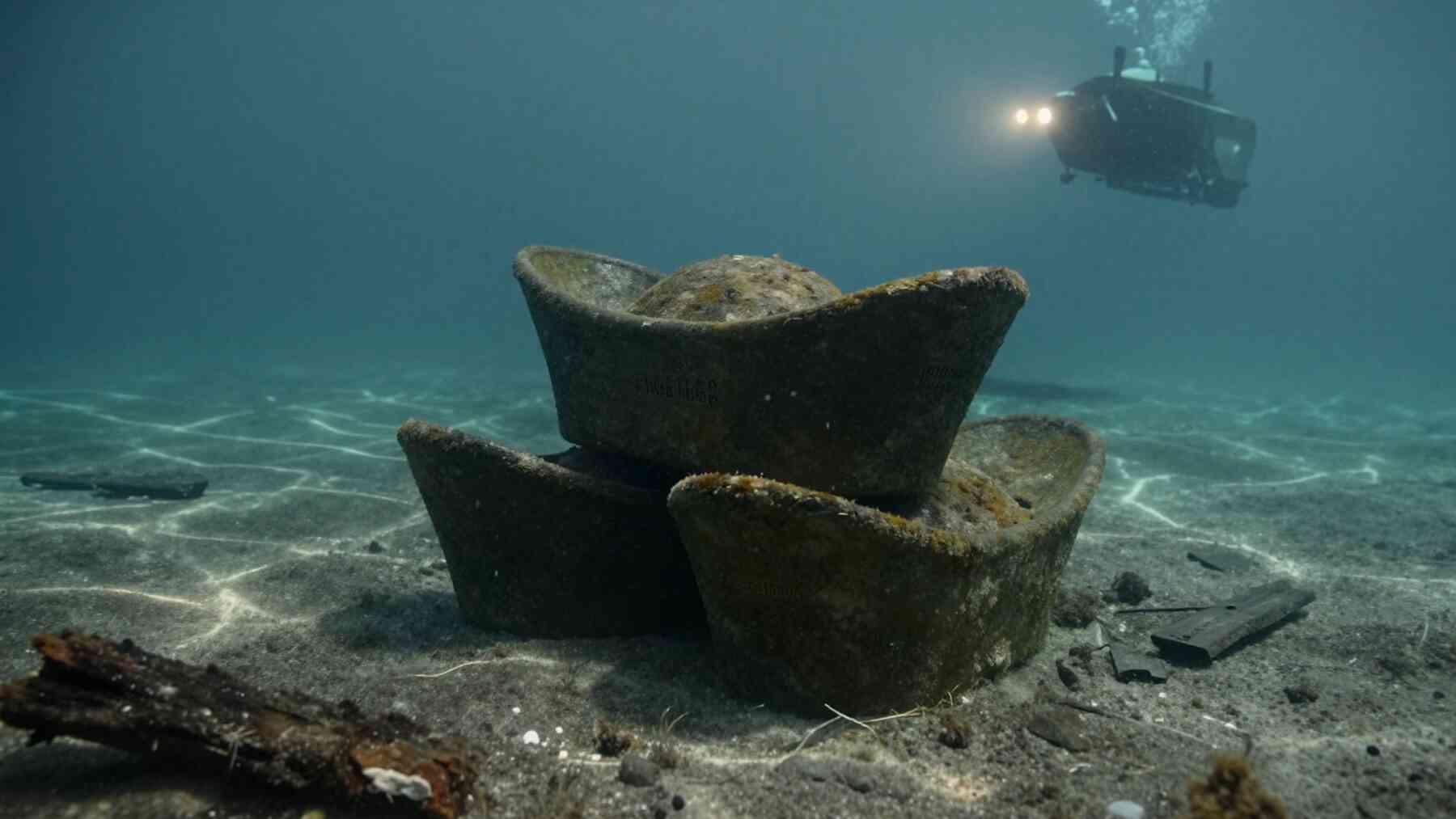
Seventy-five miles off the Norfolk coast, 131 feet beneath the North Sea, a survey crew scanning for unexploded ordnance picked up something unexpected on their instruments: three large metal objects, resting in a neat stack on the seabed.
The team was there for Hornsea 3, a wind farm project so large it’s projected to power millions of homes. But what their remotely operated vehicles found had nothing to do with modern energy — and everything to do with a ship that no one knew was there.
A routine scan turns into an archaeological find
Survey teams weren’t looking for history. They were scanning for unexploded ordnance — a standard pre-construction requirement before any major offshore build can begin. The Hornsea 3 wind farm project demanded thorough seabed assessments, and that’s exactly what brought MSDS Marine archaeologists and their remotely operated vehicles to this stretch of the North Sea.
The site likely sits along a historic shipping lane connecting Hull to the Netherlands — a corridor that saw heavy commercial traffic during the early modern period.
What they found instead were three large metal objects sitting about 75 miles off the Norfolk coast, in roughly 131 feet of water — stacked in a neat, undisturbed formation unusual enough to warrant a closer look.
Beneath the metal, timber remains confirmed what the team suspected: a shipwreck, and a previously unrecorded one at that. Each lead ingot weighed approximately 154 pounds (70 kg). The fact that all three sat in an orderly stack suggested the site had remained largely untouched for centuries.
Stamped marks point to a Dutch merchant connection
The ingots didn’t just raise questions about the ship — they offered potential answers. Each one bears a distinct maker’s mark stamped into the lead: “IS,” “EB,” and “H.” Those letters aren’t decorative. In the 17th century, such marks identified the producer or merchant responsible for the cargo, functioning almost like a paper trail pressed into metal.
What makes them particularly notable is how closely they resemble markings found on lead recovered from the Kennemerland, a Dutch East India Company vessel lost near Shetland in 1664.
Archaeologists believe the newly discovered wreck may have been a Dutch merchant ship traveling a well-worn North Sea trade route. The site likely sits along a historic shipping lane connecting Hull to the Netherlands — a corridor that saw heavy commercial traffic during the early modern period.
England’s lead trade in the 1600s
To understand why these ingots matter, it helps to know what lead meant to 17th-century Europe. Before the health risks were understood, lead was everywhere — in plumbing, construction, ammunition, and a wide range of manufactured goods. England was well-positioned to meet that demand.
Derbyshire and the Peak District ranked among England’s most productive lead-mining regions during this period. Refined lead was cast into ingots for bulk transport, then shipped out through major ports like Hull and London toward trading hubs in Amsterdam and Rotterdam.
Researchers believe these three ingots may have started their journey in Derbyshire. If further analysis confirms a regional origin, it would trace the cargo from English mines to a seabed grave in the North Sea — adding another layer of specificity to an already remarkable find.
Why pre-18th-century wrecks in this region are so rare
Not every shipwreck carries equal archaeological weight. In the southern North Sea, timber wrecks dating to before 1700 are unusually scarce — wood degrades, currents shift sediment, and centuries of fishing and dredging have disturbed many potential sites. Finding one that survived, even partially, is uncommon.
That scarcity gives this wreck particular value. It opens a rare material window into how goods moved between England and mainland Europe during the early modern period, when North Sea trade routes shaped economic relationships between nations. The relatively intact stacking of the ingots reinforces how undisturbed the site appears to be. Heritage Daily noted the significance of the find for both maritime archaeology and trade history.
From the seabed to a museum — and what comes next
The ingots didn’t stay on the seabed. Ørsted, the developer behind Hornsea 3, worked alongside the Maritime & Coastguard Agency and Historic England to record, conserve, and transfer the artifacts before construction activity continued — a collaborative effort that treated the find with the seriousness it deserved.
All three ingots are now on public display at Matlock’s Peak District Lead Mining Museum in Derbyshire, a fitting home given the likely connection to the region’s mining history.
Alison James, Heritage Services director at MSDS Marine, described the discovery as “a direct link to the past.” She also noted that further analysis may help confirm whether the lead originated in Derbyshire before it was loaded onto a ship bound for the continent.
That analysis is still ongoing. Researchers are continuing to study the ingots’ exact origin, and the wreck site itself may yield additional information as work progresses. Hornsea 3, meanwhile, moves forward — on track to become the world’s largest standalone offshore wind farm, projected to power around 3.3 million UK homes.
It’s an unusual pairing: a project built for the future, inadvertently uncovering evidence of a past that had quietly waited three centuries to be found. What else the site might reveal remains an open question — one that archaeologists are now in a position to ask.

Carlos is an engineer with strong expertise in technical and industrial topics. He previously worked at international companies such as Siemens and is multilingual.
