
A wind farm rising in a cold northern sea is creating an invisible wall that drives porpoises away for up to 12 miles because they cannot tolerate the noise
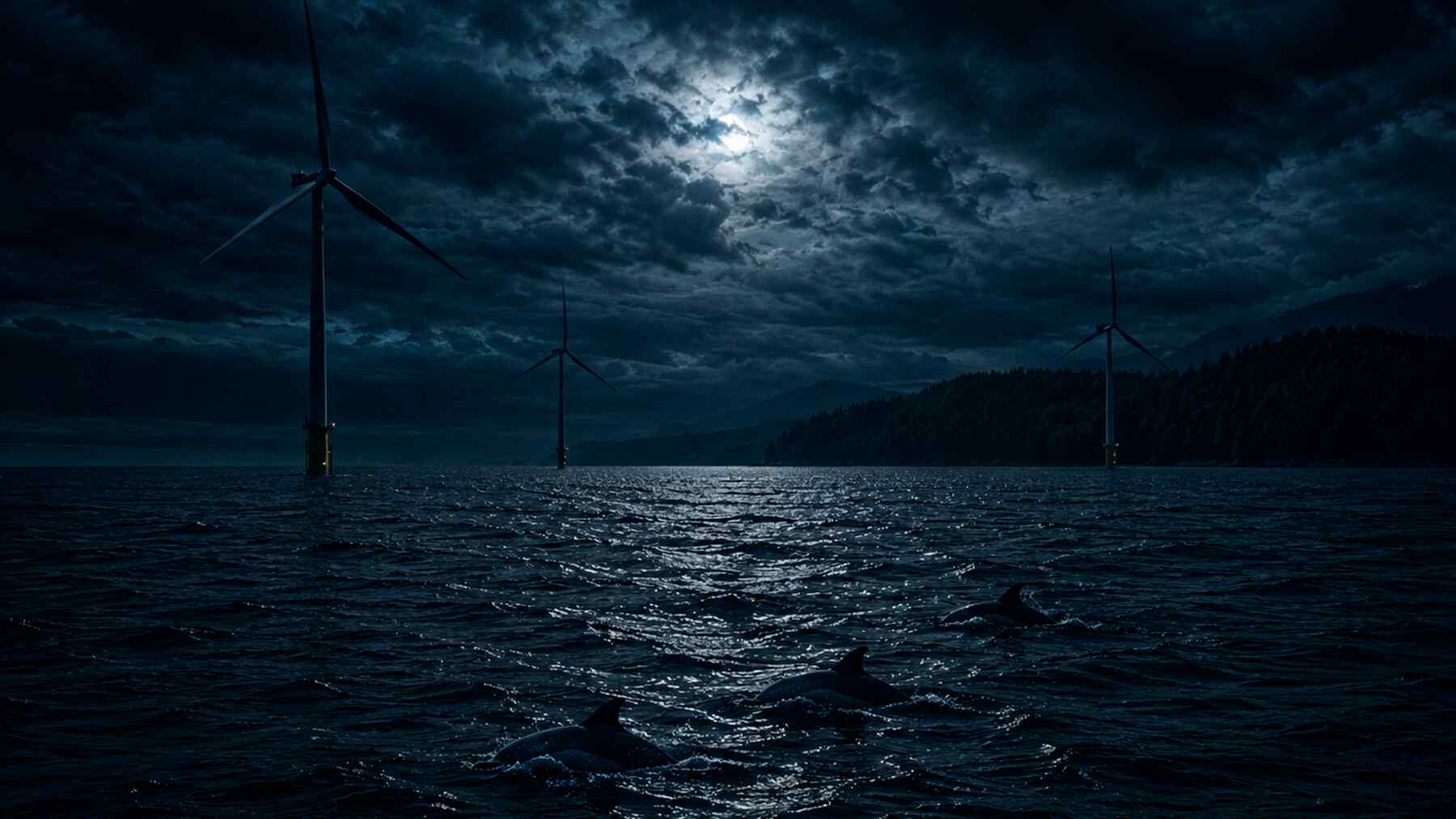 Credits: Edited, representative image
Offshore wind farms are rising across the North Sea.
But they are silencing the waters for harbor porpoises.
These mammals rely on echolocation to “see” underwater, making even minor acoustic shifts catastrophic.
By tapping into the high-speed winds of the open sea, it becomes a “large-scale mitigation” strategy by generating gigawatt-scale power.
Predicting how local species react to green tech remains an imprecise science. The long-term implications are proving more unexpected than predicted.
Will these insights inspire intervention, or are the species doomed to flee their homes?
How the northern sea has set the stage for carbon-neutrality
The Baltic Sea is now a battlefield for energy independence.
Anchoring the Nysted Offshore Wind Farm here is a strategic strike against fossil fuel dependency.
It will help bridge the gap between fossil fuel dependency and an eco-friendly future.
By tapping into the high-speed winds of the open sea, it becomes a “large-scale mitigation” strategy by generating gigawatt-scale power.
This green electricity then helps to transition entire industrial sectors away from coal and natural gas.
The EU mandates a massive 60 GW offshore capacity by 2030. This is a five-fold increase from 2020 levels, placing immense pressure on marine ecosystems.
Nationally, it will also boost power independence by providing a reliable supply for sectors and AI-integrated networks.
Unfortunately, this wind farm also presented unavoidable implications.
A renewable energy source with hidden costs: Did anyone consider noise pollution?
The promise of efficient, reliable, clean electricity often masks the complex logistical realities of offshore construction and maintenance.
Logistical bottlenecks are soaring. A global shortage of heavy-lift vessels has inflated charter costs by over 30% in recent years.
This causes project delays and inflated charter expenses.
Saltwater is relentless.
Constant corrosion and mechanical fatigue necessitate high-frequency maintenance cycles.
These keep ships—and noise—in the water year-round.
Furthermore, high-density subsea cables must also be buried deep enough to withstand damage, which adds to the final price.
However, there is another cost which entails marine life itself.
Researchers have been analyzing the short-term and long-term effects of the Nysted Offshore Wind Farm on harbor porpoises.
During the construction and early operation phases, their behavior already changed.
The findings are detailed in the technical report “Effects of the Nysted Offshore Wind Farm on harbor porpoises” published by the Pacific Northwest National Laboratory.
Wind farms: From immediate to long-term altered behavior in porpoises
Steel-on-steel pile driving creates a 12-mile “dead zone” of sound.
This acoustic assault forces porpoises to abandon vital hunting grounds instantly.
It affected their ability to navigate, socialize, and hunt.
Sound travels four times faster in water than in air. This makes underwater construction noise feel like a constant explosion to echo-locating mammals.
A follow-up study presented data that signaled a more complex long-term impact.
The study “Negative long-term effects on harbor porpoises from a large-scale offshore wind farm in the Baltic – evidence of slow recovery” was published by the Porpoise Conservation Society.
Enduring consequences: Changed behavior even a decade after construction
The porpoises did not “habituate” as researchers hoped.
A decade later, the recovery is a failure.
Porpoise presence crawled from 11% to just 29% of pre-construction levels.
The “habituation” researchers expected never happened.
This slow recovery is attributed to the turbines’ operational hum and higher maintenance vessel traffic.
It serves a permanent, albeit quieter, barrier.
Nysted is a green success but an ecological warning. We are scaling renewable energy to save the planet, yet we are displacing the very life we aim to protect.
Renewable energy must be scaled to ensure a carbon-neutral future, but it should also acknowledge the hidden costs.
Implementing measures to overcome these obstacles are key to true preservation.
This way, the pursuit of clean power will not permanently displace the ecosystems it aims to save.
Anke Maree is a writer with a clear and engaging editorial style. Her work focuses on making complex topics accessible, informative, and relevant for readers across different areas of interest.
