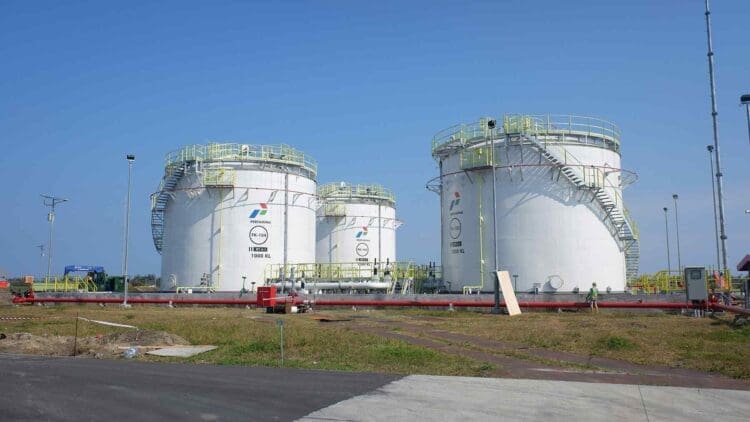

Major energy developments tend to affect the overall direction of their respective markets over time – by way of increased flow, changing balance, and early signs of success in terms of actual operation. For Golden Pass LNG, that change is beginning to occur as the facility transitions past the initial stages of production and begins to run at full production levels off its first train of liquefied natural gas (LNG) units.
From first production to full operations
The facility produced its first LNG from train 1 at the end of March and accomplished the goal of transitioning from the construction and testing phases to actual operations. That achievement validated that each of the major components — gas processing, liquefaction, and storage — was functioning as they had been designed to function, which enabled the terminal to produce LNG during real-world operating conditions.
While the first few months of operation represent a symbolic accomplishment, they do more than simply provide a milestone. The operator is now focusing on gradually increasing throughput, establishing consistent operating performance, and getting the plant ready to operate continuously.

Since the start of production, according to East Daley Energy Intelligence, gas has been delivered to the terminal in increasing amounts and was approximately 350 mmcf/day in mid-April as output from the facility continued to grow.
Increased demand creates regional impact
As train 1 becomes more utilized, the amount of natural gas demanded by the train is currently having an impact on suppliers. Based on East Daley projections, the demand for feed-gas to be used by train 1 will likely reach nearly 800 mmcf/day when train 1 operates at higher utilization rates in Q2 2026. This would establish Golden Pass as a significant new demand point for natural gas supplies along the Gulf Coast.
The changes caused by the increased utilization of Train 1 can best be seen in the Haynesville area. Previously, gas flowing out of the Haynesville area traveled either east or north via interstate pipelines. However, due to the increased usage of the facility, gas that previously flowed to those areas is now being directed towards Sabine Pass.
Data collected from pipeline usage indicates that receipt of gas flowing into Transco and Tennessee Gas has decreased, while receipts of gas flowing into the Golden Pass system have increased. These trends illustrate how regional flow patterns are starting to shift.
Building towards multi-train development
Train 1 represents just the first step in what ultimately could become a very large development effort. Overall, the Golden Pass development plan calls for the installation of three separate liquefaction Trains that collectively have a total liquefaction capacity of approximately 18 million tons per year. While Train 1 is now operational, construction and commissioning efforts related to Trains 2 & 3 continue on schedule, utilizing a phased development approach that seeks to minimize operational risks associated with expanding capacity.
According to East Daley analysts, Trains 2 & 3 will likely go into service in 2027. When these Trains do enter service, they will add to the existing demand for natural gas and will help solidify Golden Pass’s position as a long-term anchor for both upstream producers and pipeline operators.
Much more than a single project story
The ramp-up in utilization of train 1 has a number of other implications. In addition to adding another layer of flexibility to the US LNG export program, as global LNG markets remain sensitive to supply disruptions, Train 1 demonstrates a reliable approach to operation rather than emphasizing rapid growth. Therefore, train 1 is more of a test bed than an endpoint. By achieving stable operations during this early period, Golden Pass is creating conditions for its planned multi-train expansion efforts, where future expansion will occur gradually and methodically and will be an extension of an already functional system.