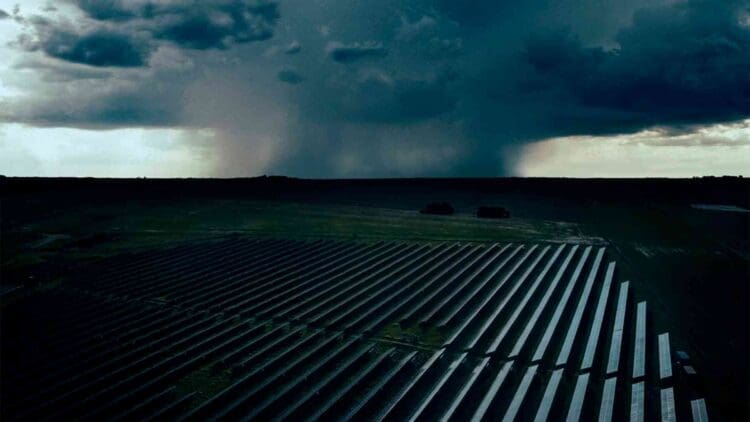

Solar plants are at risk from weather events becoming more volatile, but the real danger is unexpected.
Worldwide, nations are facing the escalating effects of climate change, which affects several sectors.
The energy sector is under pressure to prevent blackouts during emergencies, making renewable infrastructure essential.

Solar energy, paired with battery storage systems, becomes a lifesaver during extreme weather.
Yet, solar installations are vulnerable during these events, but what is the true threat?
How core factors drive global climate volatility
Every few thousand years, Earth experiences a natural cycle.
The planet’s climate undergoes significant shifts, which alter entire ecosystems.
However, these major transformations are usually highly concentrated in specific regions worldwide.
Climate change, as the world knows it, differs from this environmental process.
Human activity has been the primary driver of climate change.
Since global industrialization occurred, substantial amounts of fossil fuels have been burned for transportation and energy.
Widespread deforestation, along with advancements in industrial processes, agriculture, and technology, further accelerated the shift.
They generate massive volumes of greenhouse gases that trap heat in the atmosphere. Nitrous oxide, methane, and carbon dioxide are the primary culprits.
Atmospheric carbon dioxide has increased 50% over pre-industrial levels.
Consequently, the planet’s temperatures have been steadily rising.
This retained thermal energy has been significantly altering global weather patterns.
Volatile events have become more frequent, devastating many nations while impacting the energy sector.
A high-demand energy sector versus climate change
The world’s population continues to grow by an annual rate of 0.84%.
As the numbers reached over 8 billion in 2026, it comes as no surprise that global energy demand has skyrocketed.
Homes, industries, and giant data centers consume high amounts of electricity.
For the world’s aging power grids, this unprecedented surge has led to immense pressure.
Intensifying climate change adds to this strain by directly damaging energy supply infrastructure.
As regions swing between varying extreme weather events, a double-ended crisis is created.
Volatile weather spikes power demand while dropping generation capacity.
The addition of renewable installations as a complement to grids is a vital solution.
Solar plants with massive battery storage systems can be lifesaving during emergencies.
Yet these facilities are not indestructible when it comes to dangerous climate patterns.
Sandia National Laboratories collected data to indicate the true threat to solar farms during erratic weather.
The hidden performance of solar plants
Catastrophic events such as hurricanes can have devastating effects once they have hit a nation.
Solar plants are not excluded from this. This is why Sandia National Laboratories evaluated real-world solar performance.
Digital maintenance logs from over 800 solar farms across 24 states were gathered over six years.
Advanced natural-language processing isolated weather-related keywords. This included snow, storms, wind, and hurricanes.
The logs were paired with two years of electricity generation data from over 100 locations.
The dataset was analyzed using a machine learning algorithm.
This helped determine the variables causing the steepest drops in power output.
Challenging great industry assumptions
The primary threat that led to performance loss was the age of the solar plant.
Long-term exposure to the elements leads to cumulative weathering.
This renders older infrastructure far more vulnerable to extreme weather such as hurricanes.
The industry usually prioritizes hurricane and high-wind protection. This revelation proves that it is time to shift perspectives.
Sandia National Laboratories’ data has left the solar industry standing at a critical crossroads.
Site age and cumulative wear-and-tear as the true threats to solar prove that priorities must change.
Global climate change is not going anywhere soon.
Therefore, to protect renewable energy infrastructure, it is time to look beyond conventional hardware design.
Furthermore, regular, long-term maintenance will be key to ensuring green facilities survive the elements.
Anke Maree is a writer with a clear and engaging editorial style. Her work focuses on making complex topics accessible, informative, and relevant for readers across different areas of interest.