
New Mexico built a massive power line through endangered bird country and somehow ended up protecting 80,000 acres of habitat
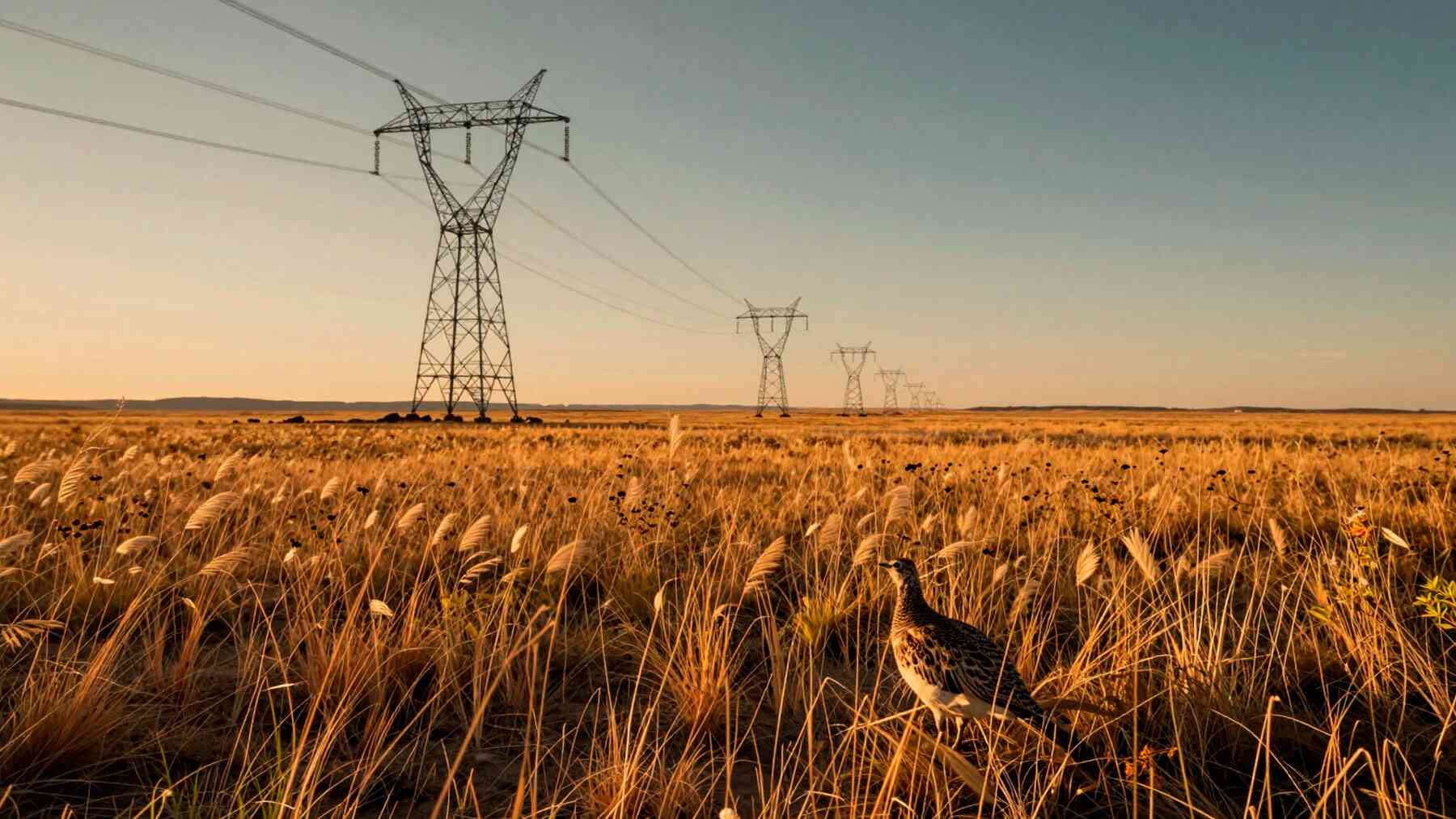
A 137-mile high-voltage transmission line cutting through the grasslands of Roosevelt and Lea counties sounds like bad news for wildlife. In this corner of eastern New Mexico, the Lesser Prairie-Chicken is already struggling to hold on.
But something unexpected happened when an energy company sat down with a bird conservation group to plan the route. The result wasn’t a trade-off between power infrastructure and habitat — it was both at once, protecting more than 80,000 acres of land that this imperiled bird depends on.
A transmission line where birds still roam
The Crossroads–Hobbs–Roadrunner line is a serious piece of infrastructure. Stretching roughly 137 miles as a double-circuit 345-kV transmission line, it connects three substations — Crossroads, Hobbs, and Roadrunner — across Roosevelt and Lea counties in eastern New Mexico. It’s now operational, helping power homes and reinforcing grid reliability across the region.
According to Audubon, two-thirds of North American bird species face extinction risk from habitat loss and intensifying extreme weather by the end of the century.
What makes the location significant is the landscape it crosses. This is shortgrass prairie country — open, undisturbed grassland that the Lesser Prairie-Chicken needs to survive. The bird is already under pressure from habitat loss and fragmentation, so any new development in its range is a potential threat. That it became a conservation win instead is the story worth telling.
Why a bird group got involved in energy infrastructure
Most people think of Audubon as a birdwatching organization. Fewer expect it to have a seat at the table when transmission lines are being planned. But the organization’s engagement with energy infrastructure follows a clear logic.
According to Audubon, two-thirds of North American bird species face extinction risk from habitat loss and intensifying extreme weather by the end of the century. In New Mexico alone, species like Mountain Bluebirds, Broad-tailed Hummingbirds, Pinyon Jays, and others are at risk if rising temperatures continue unchecked. Audubon’s position is that halting bird decline requires more renewable energy and a modernized electrical grid — not less. That means getting directly involved in the projects shaping that infrastructure, bringing bird and habitat datasets, scientific expertise, and a willingness to flag risks before construction begins.
Reconnecting a fragmented landscape
The most concrete outcome of this collaboration is what happened to the land around the line itself. Disconnected patches of Lesser Prairie-Chicken habitat were reconnected to the Lost Draw Ranch conservation bank, creating a continuous protected complex of more than 60,000 acres.
That scale matters. The Lesser Prairie-Chicken depends on large, unbroken stretches of grassland to breed and move — fragmentation is one of its primary threats, and reconnecting isolated patches directly addresses that. An additional 20,000 acres received protection through land-use restrictions, limiting further development in areas identified as critical habitat and shielding the landscape from future encroachment even as the surrounding region grows.
The partners who made it possible
This outcome required more than goodwill — four distinct parties played meaningful roles. NextEra Energy Transmission, Audubon, the New Mexico State Land Office, and the New Mexico Land Conservancy each brought something essential to the table.
NextEra, as the developer, was central. The company’s willingness to adopt conservation measures beyond the minimum required — voluntarily, not under regulatory mandate — is what made the broader habitat protections possible. Without that buy-in, the collaboration would have had no traction. Audubon contributed scientific analysis and data-driven guidance throughout planning, while the State Land Office and the Land Conservancy brought expertise in land stewardship and conservation finance, helping structure protections designed to hold over the long term.
A blueprint for future energy projects
What this project demonstrates is that the “energy versus environment” framing doesn’t have to be the default. A transmission line running through sensitive habitat can, with the right planning and partners, end up strengthening both the grid and the ecosystem it crosses.
Audubon has signaled its intent to keep engaging on future transmission and renewable energy projects using the same approach — deep analysis, early involvement, and collaboration with developers willing to move beyond compliance. The stakes are real. New Mexico’s grasslands and the species that depend on them face mounting pressure from climate change and development. The birds at risk — from prairie chickens to hummingbirds to jays — won’t wait for perfect policy conditions. Projects like this one suggest that responsible development, pursued deliberately and in partnership, could become a meaningful part of the answer. Whether this model spreads to other states and other developers is the next thing to watch.

Carlos is an engineer with strong expertise in technical and industrial topics. He previously worked at international companies such as Siemens and is multilingual.
