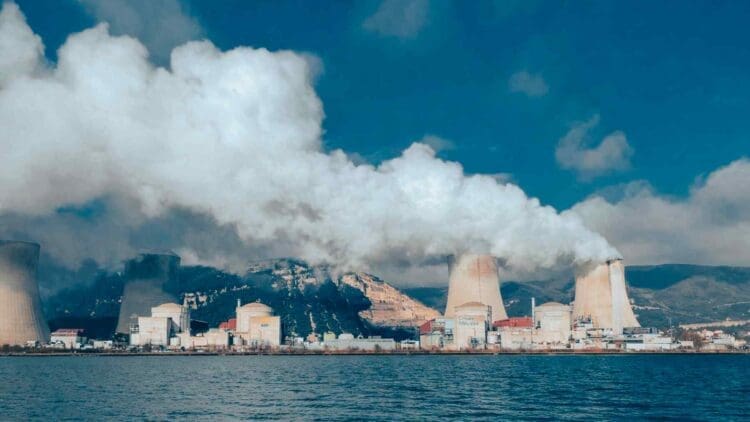

After years of silent anticipation, a nuclear dream was abruptly shut down after a faux pas.
History tends to repeat itself, which is why many people often hesitate to revisit past innovations gone wrong.
However, with the current global energy demands peaking at new record highs, and solutions are paramount.



But is the desire to meet rising power demands while keeping carbon footprints low worth risking humanity’s safety?
The high cost of a nuclear hiccup
Nuclear energy is one of the world’s greatest sources of clean, abundant power. But it is no secret that great power necessitates great responsibility.
If the source is not handled with extreme caution, the consequences can be severe, such as a 13-year-long dismissal.
A few years ago, Japan was fast on track to becoming a global symbol of energy independence. Nuclear power was the fundamental cornerstone of this energy security.
Then, in 2011, disaster struck more than once. A significant earthquake shook the nation, resulting in a devastating subsequent tsunami.
These events led to the Fukushima Daiichi disaster, sending shockwaves through the energy sector. Three reactors experienced a catastrophic meltdown, forcing the shutdown of Japan’s entire nuclear fleet.
As a result, the nation turned to fossil fuels, resulting in sky-high emission levels.
Now, due to increased pressure to meet climate targets, the decade-long hiatus is coming to an end.
Meeting the high stakes of the global energy transition
The ever-evolving digital age is putting significant pressure on global grids, infrastructure, and operations.
As a result, the added pressure on the energy sector has made the global transition to green power more complex.
Worldwide, the grid’s energy gap is getting bigger by the minute, and intermittent renewable sources are struggling to close it.
As a result, more nations are starting to take a second look at nuclear power as a “baseload” partner.
Nuclear energy is now seen as essential by the high-tech society. Its ability to ensure high-density, carbon-free, reliable power regardless of weather conditions makes it so attractive.
For Japan, it means a second chance to achieve its dream of energy resilience.
Since s it is highly dependent on fossil fuel imports, it also makes economic sense.
Now, the goal is to have nuclear power provide 20% of its electricity by 2040, but there was a hiccup.
It only took one day to shatter years of dreaming
Nuclear power plants are slowly gaining traction worldwide, but Japan’s attempt to keep up unfortunately failed.
In the Niigata Prefecture, the Tokyo Electric Power Company (TEPCO) planned on restarting the retired Kashiwazaki-Kariwa nuclear power plant.
Its seven reactors were among those forced to stand in silence after the 2011 Fukushima disaster.
By capacity, this plant is the biggest facility globally. This makes it the obvious choice to decrease Japan’s power costs and achieve net-zero.
On January 21, 2026, Unit 6 was switched on to provide 1.3 GW of power, but then the unexpected happened.
An alarm was sounded after 24 hours of operation
The monitoring system’s alarm went off, making celebrations short-lived.
The reactor’s control rods experienced an error during extraction. The rods are responsible for nuclear reaction regulation.
TEPCO ensured that everything was stable and no radiation leaked, but the damage was done. Operations were shut down until all sensors were confirmed to be perfectly calibrated.
People are so scared that the Kashiwazaki-Kariwa incident repeats itself, it leaves no margin for error in Japan’s nuclear sector.
Striking a balance between ambitious climate goals and safety precautions is thus extremely vital. The recent setback proves just how palpable the tension truly is.
But the future of sustainability is making a U-turn. While Japan gets its ducks in a row, Vietnam and Russia are in negotiations to revive nuclear power plants.
Disclaimer: Our coverage of events affecting companies is purely informative and descriptive. Under no circumstances does it seek to promote an opinion or create a trend, nor can it be taken as investment advice or a recommendation of any kind.
Anke Maree is a writer with a clear and engaging editorial style. Her work focuses on making complex topics accessible, informative, and relevant for readers across different areas of interest.