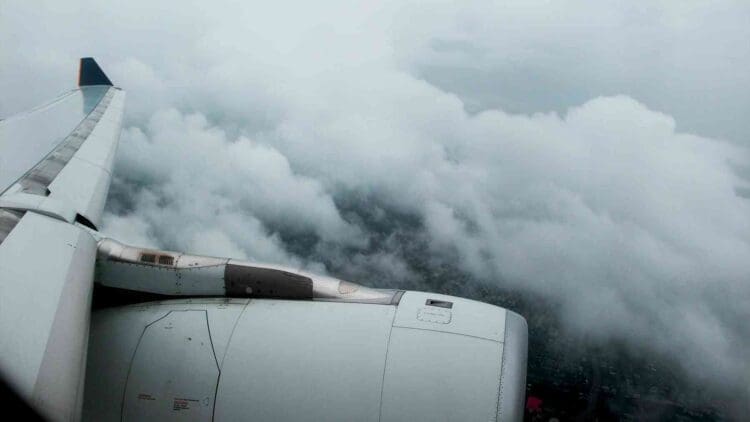

The rise in global warming has accelerated climate change, driving dangerous consequences for commercial flights.
Over the past few years, Earth’s temperature has increased above safe levels due to the continued reliance on fossil fuels.
As the planet becomes hotter, atmospheric patterns are shifting on a massive scale.



These effects are not only impacting people on the ground but also those in the air.
Will aviation corridors worldwide be able to withstand the worsening turbulence?
How climate change continues to accelerate
Renewable energy capacity has achieved historic milestones globally in recent years.
Green energy production has surged significantly.
The widespread expansion of solar and wind installations has driven this rapid increase.
While clean energy infrastructure has made impressive strides, global carbon emissions continue to rise.
This paradox is attributed to the world’s skyrocketing electricity demand, which is outpacing renewable growth.
Modern economies require an immense amount of uninterrupted power.
Furthermore, the rapid expansion of smart technology infrastructure has led to major baseload burdens.
The highest consumers are EV charging networks, AI data centers, and heavy industrial automation.
This has kept fossil fuels relevant to prevent widespread grid failures and potential blackouts.
Fossil fuel burning continues to blanket the atmosphere with greenhouse gases.
This traps solar radiation, causing global warming.
Ongoing pollution directly causes intense atmospheric shifts, which have dire effects on the planet.
The effects of climate change on Earth
Global warming and altered atmospheric patterns are causing extreme and unpredictable weather conditions.
Worldwide, nations are experiencing extreme heat waves and prolonged droughts.
Meanwhile, others are bracing against heavy flooding and severe storms.
These volatile events have left many communities facing unprecedented damage and losses.
These events have directly impacted the global agricultural sector.
Should this disruptive weather continue, the world could face a higher risk of food insecurity.
Simultaneously, ocean temperatures are rising due to increased absorption of excess atmospheric heat.
Marine heatwaves severely disrupt fragile aquatic ecosystems, leading to widespread coral bleaching.
The migration patterns of marine species are also altered by warming waters.
Furthermore, rapidly melting glaciers cause sea levels to rise at accelerated rates.
However, this climate disruption is not limited to the ground and marine environments.
A study, published by the American Geophysical Union, details how climate change increases air turbulence.
The invisible turbulence threat to commercial flights
Aviation data indicates that major challenges of modern flights include weather-related disruptions.
In the U.S., 70% of all weather-related flight accidents can be accounted for by clear air turbulence.
This dangerous event occurs unexpectedly in completely clear skies.
Since it happens without visible cloud formations, pilots cannot detect it with traditional onboard weather radar.
This causes aircraft to strike volatile pockets of fast-moving air without warning.
Global warming is the primary driver of this turbulent air threat
Increasing global temperatures inject significant amounts of thermal energy into the troposphere.
As heat builds up, it alters high-altitude wind currents.
More specifically, jet stream velocities are accelerated.
This buildup creates a temperature difference between different layers of air. This causes an intensified vertical wind shear.
Consequently, as the planet warms, the forces driving severe turbulence become stronger.
With each degree of global warming, the likelihood of experiencing intense clear air turbulence increases.
Commercial aviation must adapt to a permanently altered and more dangerous atmosphere.
Historical data confirms that clear air turbulence has increased by 60% to 155% between 1980 and 2021.
Modern aircraft are structurally designed to survive these immense high-altitude forces. Despite this, passenger injuries are projected to rise.
Experts recommend that airlines upgrade their routing strategies, adjust flight altitudes, and implement advanced detection technologies. This way, flight safety will be increased for this new bumpy climate reality.
Anke Maree is a writer with a clear and engaging editorial style. Her work focuses on making complex topics accessible, informative, and relevant for readers across different areas of interest.