
FIFA’s 2026 World Cup across 16 US, Canadian, and Mexican cities could unleash 15 million tons of carbon while the organization touts its greenest tournament yet
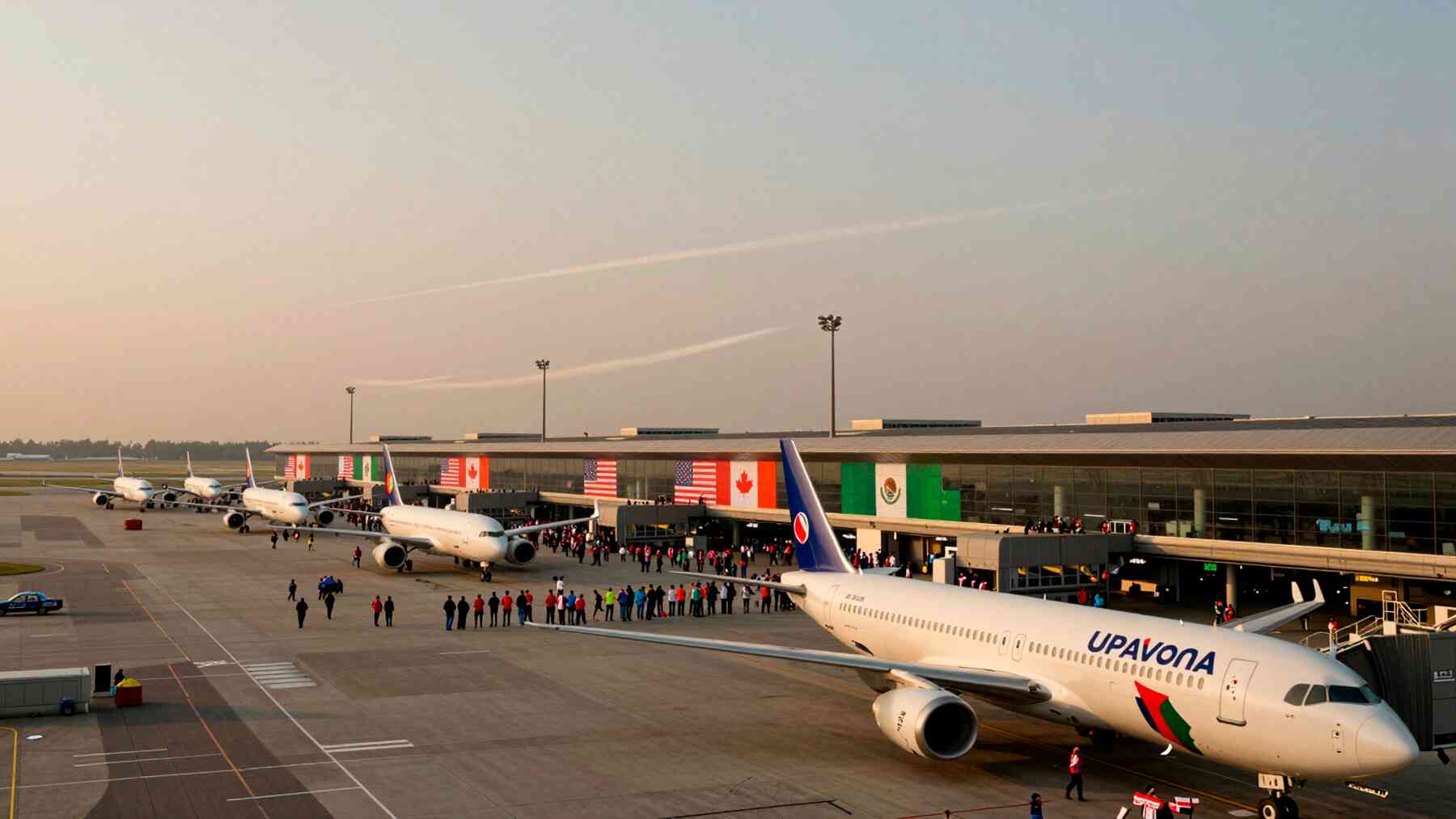 Credits: AI-made
A major international sports event meant to bring nations together has created a bigger divide.
FIFA’s 2026 World Cup has kicked off and will occur across 16 U.S., Canadian, and Mexican cities.
The tournament has been working toward a smaller carbon footprint, boasting that this will be the “greenest” World Cup yet.
Under no circumstances does it seek to promote an opinion or create a trend, nor can it be taken as investment advice or a recommendation of any kind.
However, critics believe 15 million tons of carbon emissions tell a different tale.
Why could this World Cup experience the highest emissions ever?
How a global phenomenon has expanded
The FIFA World Cup had a modest beginning.
In 1930, the tournament comprised 13 teams competing for the cup. The event was hosted entirely in Uruguay.
Almost a century later, the tournament has evolved into the world’s most-watched sporting event.
To put its popularity into perspective, it occasionally eclipses the Olympic Games in global television viewership.
It reflects soccer’s profound cultural reach and the commercialization of global sports.
This year, the World Cup marks the biggest structural shift in the tournament’s history.
The playing field was raised from 32 to 48 national teams. The schedule expanded from 64 to a total of 104 matches.
This scale led to three nations co-hosting the event to manage the logistics. That is why matches will occur in the U.S., Canada, and Mexico.
Consequently, the multi-national setup is expected to attract about 6.5 million ticket-holding spectators to attend.
FIFA’s climate pledges and the “greenest” tournament marketing
From major companies to soccer’s governing body have committed themselves to achieving top climate ratings.
FIFA has aligned itself with international climate models to demonstrate dedication to environmental sustainability.
It has pledged to lower carbon emissions by 50% by 2030. Additionally, the goal is to achieve full net-zero status by 2040.
To meet these targets, the 2026 World Cup is being promoted as a landmark, eco-friendly tournament.
Organizers have highlighted structural advantages and local green innovations to back this claim.
North American hosts will only use existing NFL and soccer venues for the event. This eliminates emissions related to manufacturing and transport.
Several host stadiums will feature cutting-edge sustainable infrastructure.
For example, Atlanta’s Mercedes-Benz Stadium has LEED Platinum certification and has 4,000 solar panels.
Despite this major commitment, the Carbon Market Watch has exposed structural climate issues surrounding the 2026 World Cup.
The systemic obstacles to the 2026 World Cup
Unpredictable power outages in the sports world are no longer the main concern.
Environmental analysts believe that FIFA’s structural choices are undermining its net-zero targets.
The vast geographic scale of the expanded format is the primary culprit.
Since the matches will span three major nations, thousands of long-haul and short-haul flights will be required.
These flights generate substantial carbon emissions per passenger-mile.
The continuous travel between the host cities will cause air travel to dwarf any energy savings achieved on the ground.
Watchdogs argue that major components of the World Cup’s lifecycle are being excluded.
A truly comprehensive analysis will include broadcasting networks, international qualifiers, and global merchandising.
This will push the estimated emissions closer to 70 million metric tons.
Furthermore, FIFA signed a $100 million-per-year sponsorship deal with Saudi Aramco.
The alliance with the world’s largest state-owned oil corporation is widely condemned as corporate “sportswashing.”
This partnership is perceived as directly clashing with the emission reduction goals of the Paris Agreement.
To overcome this major division in sustainability beliefs, future tournament models must change to align with climate targets.
Experts suggest prioritizing regional group-stage clustering to minimize team and fan air travel.
Additionally, strict, independent carbon budgets should be implemented for all events.
Finally, avoiding fossil fuel sponsorships will establish environmental credibility.
The climate crisis is already worsening, but global sporting events do not have to play a major role in it.
Disclaimer: Our coverage of events affecting companies is purely informative and descriptive. Under no circumstances does it seek to promote an opinion or create a trend, nor can it be taken as investment advice or a recommendation of any kind.
Anke Maree is a writer with a clear and engaging editorial style. Her work focuses on making complex topics accessible, informative, and relevant for readers across different areas of interest.
