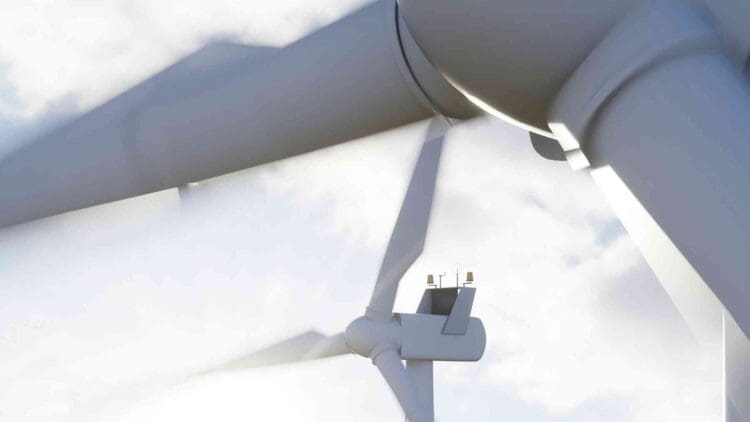

The end-of-life cycle of wind turbines has taken a new shape after reimagining blades.
Wind infrastructure has significantly scaled up over the past few years.
This was a strategic move, as the evolution of digital technologies has pushed up global electricity needs.

But as these giant towers grew taller, so did the typical environmental concerns.
To prevent these structures from filling more landfills, can exploring different blade composites overcome this disposal challenge?
How the relationship between digitization and energy mandates has become more complex
Within a decade, the total volume of data has significantly increased worldwide.
The key to this surge is the constant need for instant connectivity.
This is no longer limited to mere communication and information networks.
Computational research has become advanced. Manufacturing has implemented smart tech.
Logistics and global financial networks have embraced automation. All of this requires immediate data access.
Now, as generative AI becomes more popular, the world’s computing requirements change.
Specialized graphics processing units used for AI processes and workloads consume four times more power than conventional servers.
This is why projections point to a sharp rise in global data center electricity usage.
Despite this, digital technology remains critical for optimizing supply chains and lowering industrial emissions.
Automated digital networks help grid operators manage complex power distributions.
This streamlines the absorption and supply of variable solar and wind energy.
Yet, maintaining operations requires a great amount of electricity.
Scaling wind turbines to relieve grid strain
The world’s existing power grids were created to handle predictable, centralized fossil fuel power generation.
In the Digital Age, aging electrical infrastructure and operations are increasingly pressured by surging digital demand.
Data center hubs cause immense spikes in electricity usage, which legacy grids cannot handle.
Consequently, the risk of widespread grid overloads became greater.
Furthermore, the continued reliance on fossil fuels made meeting climate targets more difficult.
For utilities, this raised the need to quickly expand their energy capacities.
Wind turbines became the primary solution for swift, large-scale power generation.
High scalability, rapid deployment, and high-volume clean electricity are now essential to protect digitization.
However, taller wind turbine towers meant longer, bigger turbine blades.
While beneficial during the operational stage, these giant blades proved more difficult and costly to recycle.
To prevent global waste from growing, the National Renewable Energy Laboratory (NREL) reimagined the design entirely.
Adding unlimited versatility to wind material reclaim
Wind turbine blades destined for landfills can now have a second chance.
NREL researchers focused on the chemical bonds inside blade coatings.
The petroleum-based plastics of conventional blades have irreversible bonds once their thermoset resins have cured.
This means the blades cannot be melted down or reshaped. The only recycling option is to mechanically shred them into concrete filler.
The NREL solved this by using a bio-material called PolyEster Covalently Adaptable Network (PECAN).
The new and improved wind turbine blade
PECAN’s chemical structure is made from plant-derived sugars.
These create specialized bonds within the material while maintaining chemical structural properties in line with industry standards.
During operation, it maintains high durability, even in extreme weather.
The cross-linked polymer bonds are engineered to break down under specific trigger conditions.
At the end of its life cycle, the blade is submerged in a mild chemical bath that cleaves the bonds. The structural glass fibers are unaffected, and blades become reusable.
A 29.5-foot prototype was created to prove its commercial feasibility.
The fact that the resin dissolves completely in six hours makes PECAN a highly attractive alternative material.
The plant-derived, recyclable composite establishes a clear path toward a circular lifespan for wind turbines.
This way, the global wind industry can scale its infrastructure to meet demands while maintaining a sustainable footprint.
Anke Maree is a writer with a clear and engaging editorial style. Her work focuses on making complex topics accessible, informative, and relevant for readers across different areas of interest.