
Chemists found lemons could be a hidden energy source and connected 2,923 of them to create a working battery
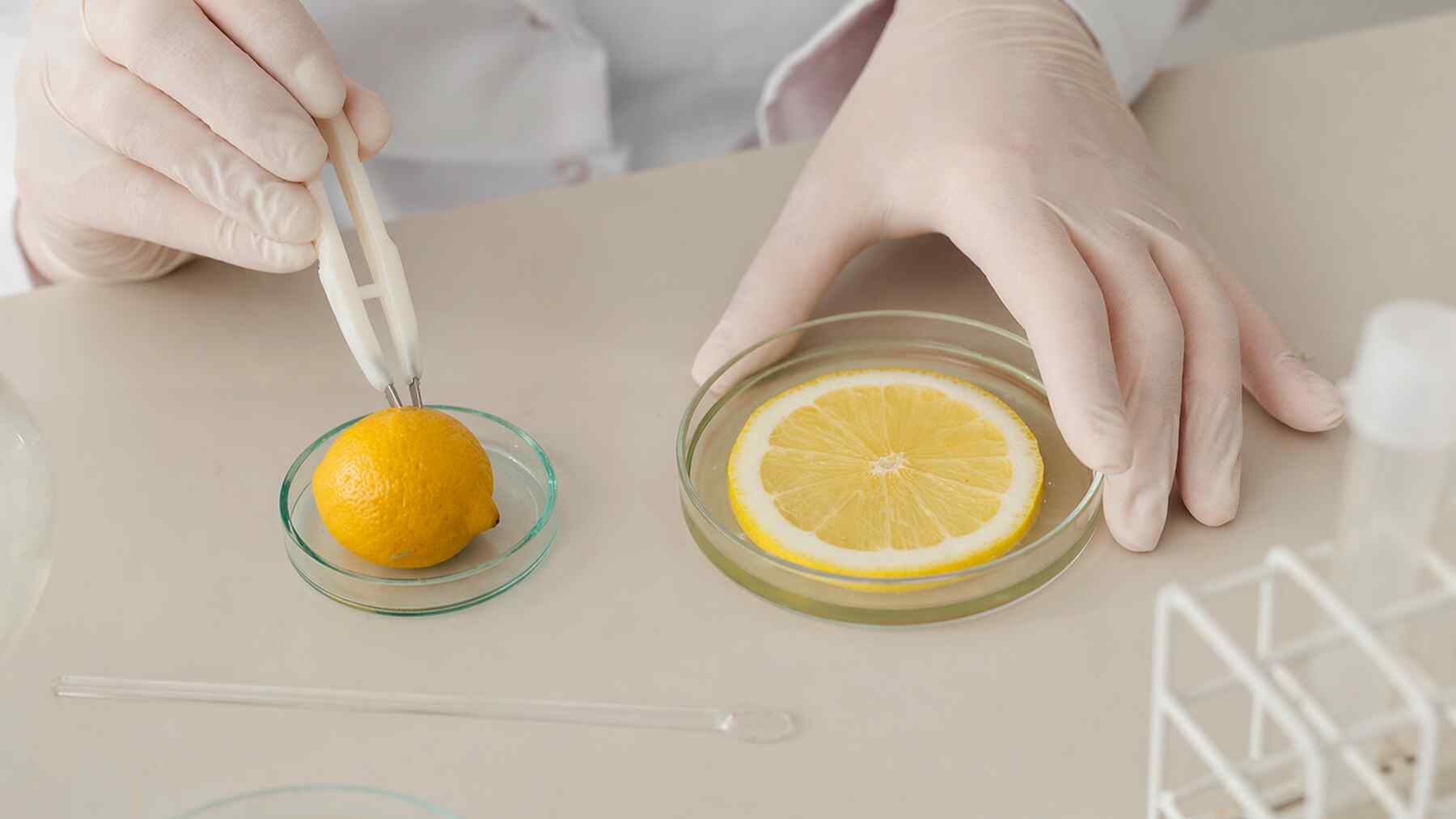 Credits: Edited, representative image
Tapping into the energy of lemons to create a record-breaking battery inspires more bio-friendly approaches to power.
Producing clean electricity is one thing, but sustainable storage, scaling, and disposal are entirely another.
As the world pushes the limits of existing infrastructure to meet energy needs, complete sustainability is often left behind.
Green infrastructure, such as wind turbines and solar panels, requires massive battery energy storage systems (BESS) to overcome weather-dependent intermittency.
Could using popular citrus fruits pave the way to a closed power cycle, ensuring that no hidden footprint is overlooked?
How open-ended power cycles end up costing more
Globally, the push to accelerate the renewable energy transition focuses significantly on generation capability. However, the current methods remain fundamentally open-ended.
This means the primary focus of the energy economy is on “input” (solar, wind, or minerals) and “output” (electricity).
On paper, these points are critical to save the planet. But in reality, the tools designed to save Earth often have several hidden environmental and economic costs.
Green infrastructure, such as wind turbines and solar panels, requires massive battery energy storage systems (BESS) to overcome weather-dependent intermittency.
These very systems form the base of the world’s “sustainability gap.”
One of the great challenges is efficiently scaling battery systems to store energy without experiencing any losses.
Scaling is problematic due to the eco-invasive nature of mineral extraction. Furthermore, production is extremely energy-intensive.
The cycle is further left open by the non-biodegradable nature of these systems, increasing the need for eco-friendly alternatives.
Finding an alternative before it is too late
The U.S. has invested in a “doomsday vault” in anticipation of a global critical mineral crisis.
The key ingredients to standard high-performance batteries are finite minerals such as lithium, nickel, and cobalt.
Only a few nations own their own natural reserves. With electrification being pushed and demands for batteries increasing, global supply chain issues and geopolitical tensions have become concerning.
Another critical issue is the world’s rapidly growing “freshwater bankruptcy.” Producing one ton of lithium can utilize up to 500,000 gallons of water.
In many regions, this diverts critical resources away from local ecosystems and agriculture, resulting in a secondary environmental crisis.
Presently, it is also more cost-effective to mine new minerals rather than to recycle them from spent batteries. The result is landfills accumulating hazardous waste.
With such a heavy toll, scientists from The Royal Society of Chemistry decided to break records and barriers.
A functional battery with a lemon twist
Connecting lemons to create a battery has become more than just a science fair project.
For the Royal Society of Chemistry, it shows great potential as a green alternative.
Together with Professor Saiful Islam, they pushed the limits of bio-electrochemistry.
2,923 lemons were connected in a large circuit, which generated 2,307.8 volts. This far surpassed the previous Guinness World Record of 1,521 volts.
But this accomplishment was more than a mere record-breaking stunt.
Showcasing the capabilities of a citrus bio-battery
At the COP26 Climate Change Summit in Manchester, this lemon battery was used to launch a go-kart race.
The demonstration’s last bit of success was to showcase the closed power cycle. The lemons were sent to an anaerobic digestion facility after the record was set.
There, they were processed into biogas for the grid and bio-fertilizer for local agriculture. This ensured a complete circular energy economy.
Unfortunately, the success of this record-breaking lemon battery does not mean that the world will be powered by citrus soon.
Professor Islam pointed out that the actual usable power (wattage) was still too low to power a smart TV.
These bio-batteries also still face a major scaling bottleneck due to internal resistance. The next step will be to create high-density chemical innovations that mimic this biological approach at a higher efficiency.
Anke Maree is a writer with a clear and engaging editorial style. Her work focuses on making complex topics accessible, informative, and relevant for readers across different areas of interest.
